
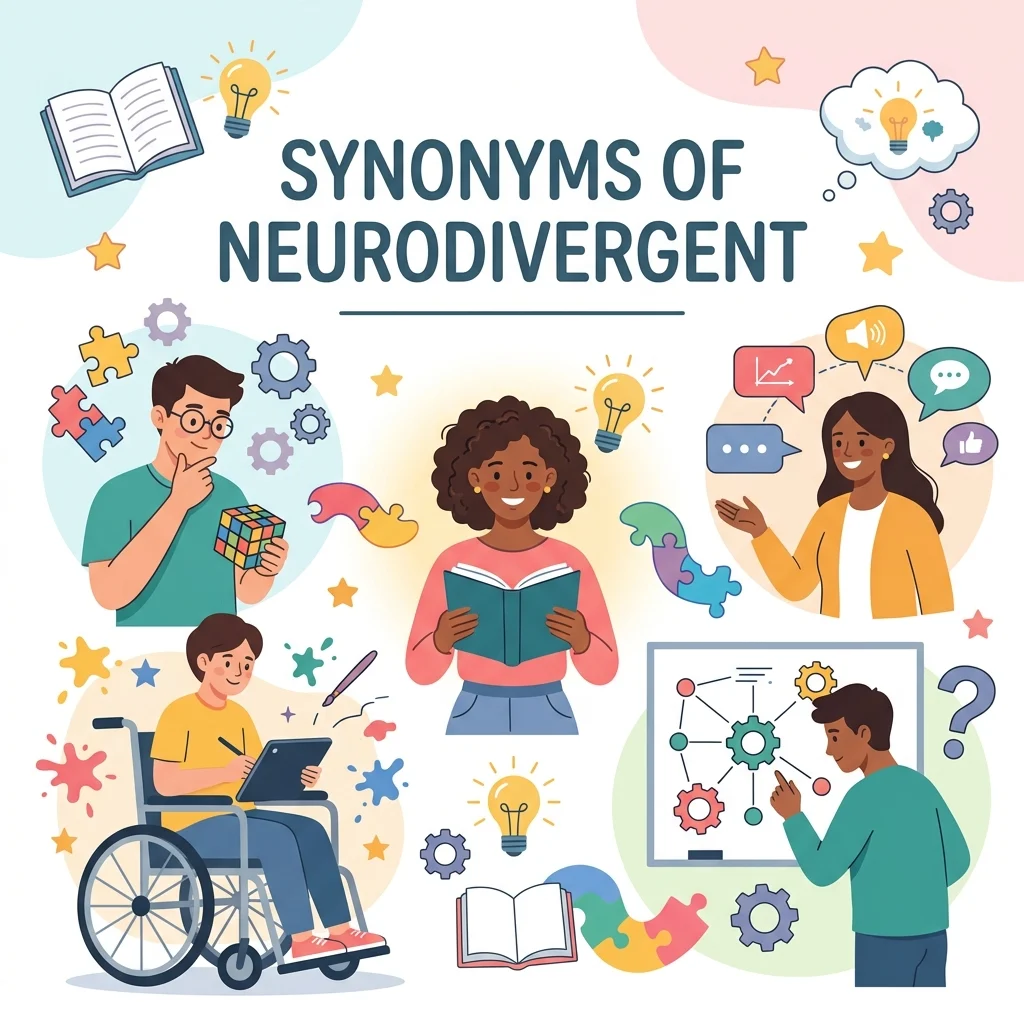
Synonyms of neurodivergent include neuroatypical and, in some contexts, neurodistinct. Related expressions include neurologically different and having a different neurological profile. The best alternative depends on the context and intended meaning.
Looking for the right synonyms of neurodivergent can be challenging because not every related term means exactly the same thing. Whether you’re writing an article, improving your vocabulary, or searching for respectful language, choosing the right expression helps you communicate clearly without misrepresenting neurological differences.
The word neurodivergent describes a person whose brain functions, processes information, or experiences the world in ways that differ from what is considered typical. It is commonly used in discussions about autism, ADHD, dyslexia, and other forms of neurological variation. Because people experience these differences in different ways, the most appropriate wording depends on the individual and the context.
Some alternatives and related expressions include neuroatypical, neurodistinct, and neurologically different. For example, “a neurodivergent student” may be appropriate when discussing a student’s neurological differences, while “a student with a different neurological profile” offers a more descriptive alternative. However, these expressions are not always interchangeable, and some people prefer particular terms to describe themselves.
It’s also important to distinguish neurodivergent from neurodiverse. Although the words are related, neurodiverse generally describes a group containing people with different neurological profiles, whereas neurodivergent typically describes an individual. Understanding this distinction helps you avoid confusing terminology and choose words that fit your sentence.
In this guide, you’ll discover useful synonyms of neurodivergent, related terms, respectful alternatives, and example sentences showing how to use them naturally. You’ll also learn which expressions may work best in everyday conversations, educational writing, and discussions about neurodiversity. Whether you’re a student, writer, blogger, or English learner, this guide will help you understand the differences between these terms and choose appropriate wording with confidence.
Neurodiverse
Meaning: Neurodiverse describes a group of people who have different ways of thinking and learning.
Examples:
- Our classroom is neurodiverse.
- A neurodiverse team can bring many ideas.
Neurologically Different
Meaning: This phrase describes someone whose brain works differently from what is typical.
Examples:
- He is neurologically different from many of his classmates.
- Everyone deserves respect, including neurologically different people.
Neuroatypical
Meaning: Neuroatypical describes a person whose brain works in a way that is not considered typical.
Examples:
- The book includes stories about neuroatypical children.
- She writes about neuroatypical experiences.
Neurodistinct
Meaning: Neurodistinct describes someone whose way of thinking differs from the usual pattern.
Examples:
- The group welcomes neurodistinct learners.
- His neurodistinct mind helps him notice small details.
Neurologically Diverse
Meaning: Neurologically diverse describes people who have different kinds of brain development and thinking styles.
Examples:
- The school supports neurologically diverse students.
- Our team is neurologically diverse.
Differently Wired
Meaning: Differently wired describes someone whose brain works in a different way.
Examples:
- My brother is differently wired and loves solving puzzles.
- The teacher supports children who are differently wired.
Different-Brained
Meaning: Different-brained describes a person who thinks or learns differently from others.
Examples:
- The story celebrates different-brained children.
- Different-brained learners may need different tools.
Neurodivergence-Related
Meaning: This phrase describes something connected to differences in how brains work.
Examples:
- The website shares neurodivergence-related information.
- She reads neurodivergence-related books.
Neurodevelopmentally Different
Meaning: This phrase describes someone whose brain developed differently from the usual pattern.
Examples:
- The program supports neurodevelopmentally different children.
- Each neurodevelopmentally different learner may have unique needs.
Outside the Neurotypical Norm
Meaning: This phrase describes someone whose brain works outside common patterns of thinking and learning.
Examples:
- His learning style falls outside the neurotypical norm.
- The article explains experiences outside the neurotypical norm.
Autistic
Meaning: Autistic describes a person who is on the autism spectrum.
Examples:
- The autistic student enjoys talking about space.
- She is autistic and prefers clear instructions.
ADHD
Meaning: ADHD is a condition that can affect attention, activity, and impulse control.
Examples:
- He has ADHD and uses reminders to stay organized.
- The teacher learns how ADHD can affect schoolwork.
Dyslexic
Meaning: Dyslexic describes a person who has dyslexia, which can make reading and spelling harder.
Examples:
- The dyslexic learner uses audio books.
- She is dyslexic and enjoys writing stories.
Dyspraxic
Meaning: Dyspraxic describes a person who has dyspraxia, which can affect movement and coordination.
Examples:
- The dyspraxic student uses extra time for some tasks.
- He is dyspraxic and practices new movements slowly.
Dyscalculic
Meaning: Dyscalculic describes a person who has dyscalculia, which can make number work difficult.
Examples:
- The dyscalculic learner uses number charts.
- She is dyscalculic and benefits from clear math steps.
Tourettic
Meaning: Tourettic describes a person who has Tourette syndrome or experiences related tics.
Examples:
- The Tourettic speaker shares his story with care.
- The class learns how to support Tourettic people.
Learning-Different
Meaning: Learning-different describes someone who learns in a way that differs from common teaching methods.
Examples:
- The learning-different child enjoys hands-on tasks.
- Our school supports learning-different students.
Differently Abled
Meaning: Differently abled is a phrase sometimes used to describe people who have different abilities or support needs.
Examples:
- The event welcomes people with different support needs.
- The article discusses inclusive spaces for differently abled people.
Note: This phrase is not a synonym for neurodivergent and may not be preferred by everyone.
Cognitively Different
Meaning: Cognitively different describes someone whose thinking or learning works differently from others.
Examples:
- The program welcomes cognitively different learners.
- Cognitively different people may solve problems in unique ways.
Different Thinker
Meaning: A different thinker is someone who approaches ideas or problems in their own way.
Examples:
- She is a different thinker who loves new challenges.
- Every different thinker brings useful ideas to a group.
Creative Thinker
Meaning: A creative thinker finds new ways to understand ideas or solve problems.
Examples:
- He is a creative thinker who builds amazing models.
- The project needs a creative thinker.
Divergent Thinker
Meaning: A divergent thinker can come up with many different ideas.
Examples:
- The divergent thinker suggested five new plans.
- Our teacher encourages divergent thinking.
Outside-the-Box Thinker
Meaning: An outside-the-box thinker finds ideas that are not usual or expected.
Examples:
- She is an outside-the-box thinker.
- The team needs an outside-the-box thinker for this project.
Unique Thinker
Meaning: A unique thinker has a way of thinking that stands out from others.
Examples:
- My friend is a unique thinker.
- The unique thinker found a simple answer.
Independent Thinker
Meaning: An independent thinker forms ideas and opinions using their own judgment.
Examples:
- He is an independent thinker who asks good questions.
- The teacher encourages every independent thinker.
Visual Learner
Meaning: A visual learner understands information well through pictures, diagrams, or videos.
Examples:
- The visual learner remembers ideas from charts.
- She uses drawings to study for tests.
Hands-On Learner
Meaning: A hands-on learner learns best by doing things.
Examples:
- The hands-on learner builds a model to understand science.
- He learns new skills by trying them himself.
Detail-Oriented Thinker
Meaning: A detail-oriented thinker pays close attention to small things.
Examples:
- The detail-oriented thinker noticed a tiny mistake.
- She checks every part of her work.
Pattern-Oriented Thinker
Meaning: A pattern-oriented thinker is good at noticing repeated shapes, ideas, or events.
Examples:
- The pattern-oriented thinker solved the puzzle.
- He spots patterns in number games.
Deep Thinker
Meaning: A deep thinker spends time thinking carefully about ideas.
Examples:
- She is a deep thinker who asks thoughtful questions.
- The deep thinker likes quiet time to reflect.
Sensitive Thinker
Meaning: A sensitive thinker may notice feelings or changes in their surroundings strongly.
Examples:
- The sensitive thinker noticed that his friend felt sad.
- She likes a calm place to study.
Sensory-Sensitive Person
Meaning: A sensory-sensitive person may find sounds, lights, smells, or touch very strong.
Examples:
- The sensory-sensitive person wears earplugs in loud places.
- Bright lights can bother a sensory-sensitive child.
Highly Focused Person
Meaning: A highly focused person can give strong attention to a task or interest.
Examples:
- The highly focused person worked on the model for hours.
- He becomes highly focused when drawing.
Alternative Learner
Meaning: An alternative learner may need a different way to learn or understand information.
Examples:
- The alternative learner uses pictures and short notes.
- The teacher offers more than one way to study.
Nontraditional Learner
Meaning: A nontraditional learner learns in a way that differs from common classroom methods.
Examples:
- The nontraditional learner enjoys learning through projects.
- The school offers flexible lessons for nontraditional learners.
Individual Learner
Meaning: An individual learner has their own needs, strengths, and way of learning.
Examples:
- Every individual learner deserves support.
- The teacher makes a plan for each individual learner.
Different Learner
Meaning: A different learner may understand or remember information in a way that differs from others.
Examples:
- The different learner enjoys lessons with pictures.
- The school helps each different learner succeed.
Diverse Thinker
Meaning: A diverse thinker brings a different point of view to a topic.
Examples:
- The diverse thinker offered a fresh idea.
- Our group values every diverse thinker.
Unique Learner
Meaning: A unique learner has their own way of learning and growing.
Examples:
- The unique learner enjoys learning with games.
- Her teacher respects her needs as a unique learner.
Nonconforming Thinker
Meaning: A nonconforming thinker does not always follow common ways of thinking.
Examples:
- The nonconforming thinker questioned the old rule.
- His ideas helped the group find another path.
Neurological Minority
Meaning: A neurological minority is a group whose brain differences are less common in society.
Examples:
- The article discusses the rights of a neurological minority.
- The group works to improve support for neurological minorities.
Neurodivergent Individual
Meaning: A neurodivergent individual is a person whose brain works differently from what is typical.
Examples:
- Each neurodivergent individual has their own strengths.
- The event welcomes every neurodivergent individual.
Neurodivergent Person
Meaning: A neurodivergent person has a way of thinking or processing information that differs from the usual pattern.
Examples:
- The guide shares advice for a neurodivergent person.
- A neurodivergent person may prefer clear plans.
Neurodivergent Learner
Meaning: A neurodivergent learner may think, learn, or process information differently from many other students.
Examples:
- The neurodivergent learner uses a quiet study space.
- The school gives the neurodivergent learner helpful tools.
Neurodivergent Student
Meaning: A neurodivergent student is a student whose brain works differently from what is typical.
Examples:
- The neurodivergent student asks for written instructions.
- The teacher supports each neurodivergent student fairly.
Neurodivergent Child
Meaning: A neurodivergent child is a child whose brain develops or works differently from what is typical.
Examples:
- The neurodivergent child enjoys a steady daily routine.
- The family listens to the neurodivergent child’s needs.
Neurodivergent Adult
Meaning: A neurodivergent adult is an adult whose brain works differently from what is typical.
Examples:
- The neurodivergent adult shares tips for work.
- The company makes its workplace more welcoming to neurodivergent adults.
Neurodivergent Mind
Meaning: A neurodivergent mind describes a way of thinking that differs from what is typical.
Examples:
- The book celebrates the neurodivergent mind.
- A neurodivergent mind may approach a problem in a new way.
Neurodivergent Community Member
Meaning: A neurodivergent community member is someone with a brain difference who belongs to a community.
Examples:
- Each neurodivergent community member can share their views.
- The group listens to every neurodivergent community member.
Person with a Neurodevelopmental Condition
Meaning: This phrase describes someone who has a condition that affects how their brain develops.
Examples:
- The service offers support for a person with a neurodevelopmental condition.
- The guide explains ways to help people with neurodevelopmental conditions.
(FAQs)
1. What does neurodivergent mean?
Neurodivergent describes a person whose brain works or develops differently from what is considered typical. It can include people with autism, ADHD, dyslexia, and other conditions.
2. What is another word for neurodivergent?
Related terms include neuroatypical, neurologically different, and differently wired. These terms are not always interchangeable, so choose the one that fits the context.
3. Is neurodiverse the same as neurodivergent?
No. Neurodivergent usually describes an individual whose brain works differently from the typical pattern. Neurodiverse usually describes a group with different kinds of brains and thinking styles.
4. How can I describe a neurodivergent person respectfully?
Use the words the person prefers. Many people use identity-first language, such as “autistic person,” while others prefer person-first language, such as “person with autism.”
5. Why should writers learn synonyms of neurodivergent?
Writers can use related words to explain brain differences clearly, avoid repeating the same term, and create respectful content for different readers.
Conclusion
Learning synonyms and related words for neurodivergent can help you write clearly, improve your blog posts, and communicate with care. Remember that these terms do not all mean exactly the same thing. Choose words that fit the situation and respect each person’s preferences. Practice using these terms in emails, essays, articles, and daily conversations. The more you learn about different ways of thinking, the better you can share ideas and understand others.

Nora Collins writes stories about the secrets we keep, the choices that define us, and the connections that change our lives. With emotionally layered characters and an atmospheric style, she turns ordinary moments into unforgettable journeys of courage, discovery, and quiet transformation.
Pingback: 91+ Synonyms for Confidence: Find the Perfect Word
Pingback: 151+ Synonyms for Lonely: Find the Perfect Word