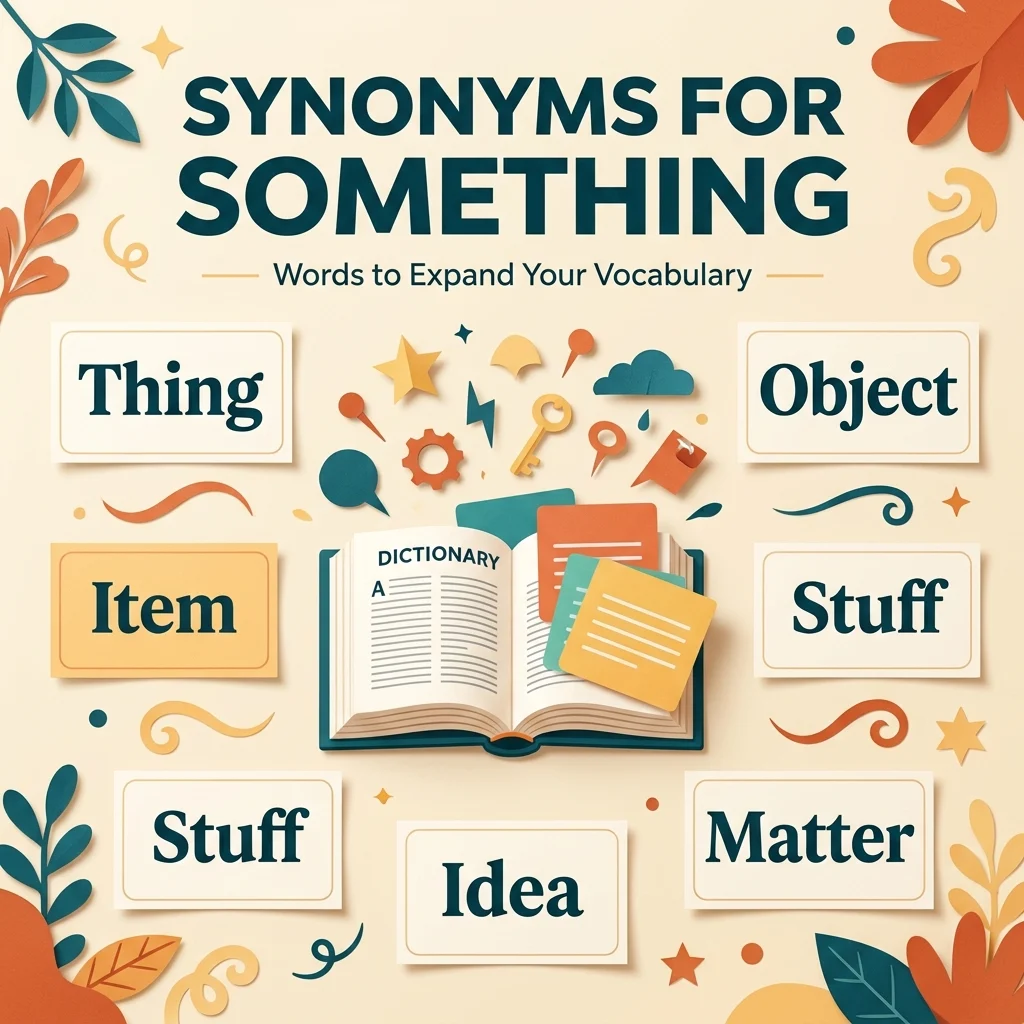
Synonyms for something include thing, object, item, matter, subject, element, occurrence, and stuff. Other ways to say something depend on whether you’re referring to a physical object, an idea, an event, or an unspecified situation.
Looking for the right alternative to the word something? Although this everyday word is useful in many situations, repeating it too often can make your writing sound vague or less descriptive. Knowing different ways to say something can help you express your thoughts more clearly, improve your vocabulary, and make your sentences sound more natural. Whether you’re writing an essay, completing an assignment, creating website content, or improving your everyday English, the right alternative can make a noticeable difference.
The word something can refer to an unknown object, an idea, an event, an experience, or a situation that has not been clearly identified. However, its alternatives are not always interchangeable. For example, object refers to a physical thing, matter can describe a subject or issue, occurrence means an event, and stuff is a casual word for things in general. Understanding these differences helps you avoid awkward replacements.
In this guide, you’ll discover useful synonyms for something, including common, formal, informal, academic, and everyday alternatives. You’ll also explore their meanings, practical example sentences, and different ways to use them in conversations, essays, and professional writing. Whether you’re a student, writer, blogger, or English learner, these alternatives will help you choose more precise words and express your ideas with confidence.
Thing
Meaning: A thing is an object or item that you can see, use, or talk about.
Examples:
- I found a strange thing in my bag.
- Please bring that thing from the table.
Object
Meaning: An object is something you can see or touch.
Examples:
- There is a small object under my bed.
- Keep sharp objects away from children.
Item
Meaning: An item is one thing on a list or in a group.
Examples:
- This item is missing from my shopping list.
- Each item costs five dollars.
Stuff
Meaning: Stuff means a group of things that may not be named.
Examples:
- I need to pack my stuff before leaving.
- There is too much stuff on your desk.
Matter
Meaning: A matter is a thing or subject that needs attention.
Examples:
- We need to talk about an important matter.
- This is a private matter.
Issue
Meaning: An issue is a problem or subject that people talk about.
Examples:
- We have an issue with the internet.
- The teacher discussed this issue in class.
Subject
Meaning: A subject is a thing that people talk or learn about.
Examples:
- My favorite subject is English.
- Let’s change the subject for now.
Topic
Meaning: A topic is an idea or subject that people discuss.
Examples:
- Our topic today is healthy food.
- She chose an easy topic for her speech.
Element
Meaning: An element is one part of a whole thing.
Examples:
- Trust is an important element of friendship.
- Water is a key element in plant growth.
Feature
Meaning: A feature is one part or quality of something.
Examples:
- This phone has a useful feature.
- The best feature of this bag is its size.
Aspect
Meaning: An aspect is one part of a thing or idea.
Examples:
- We should look at every aspect of the plan.
- Money is one aspect of daily life.
Part
Meaning: A part is one piece of a whole thing.
Examples:
- This part of the book is very funny.
- I lost a part of my toy.
Piece
Meaning: A piece is one small part of something.
Examples:
- Can I have a piece of cake?
- She found a piece of paper on the floor.
Detail
Meaning: A detail is a small piece of information about something.
Examples:
- Tell me every detail of your trip.
- I noticed a small detail in the picture.
Fact
Meaning: A fact is something that is true.
Examples:
- It is a fact that the Earth moves around the Sun.
- She shared an interesting fact about animals.
Idea
Meaning: An idea is a thought or plan in your mind.
Examples:
- I have an idea for our school project.
- That sounds like a great idea!
Thought
Meaning: A thought is something that comes into your mind.
Examples:
- I had a funny thought during class.
- Please share your thoughts with me.
Concept
Meaning: A concept is an idea about how something works.
Examples:
- The teacher explained a new concept today.
- This concept is easy to understand.
Notion
Meaning: A notion is an idea or belief about something.
Examples:
- He has a strange notion about success.
- I like the notion of working from home.
Point
Meaning: A point is an idea or fact that someone wants to share.
Examples:
- You made a good point in the meeting.
- I want to explain one more point.
Event
Meaning: An event is something that happens.
Examples:
- The school event starts at noon.
- That was a special event for our family.
Occurrence
Meaning: An occurrence is something that happens at a certain time.
Examples:
- A strange occurrence took place last night.
- Such an occurrence is rare in this town.
Incident
Meaning: An incident is an event that happens, often in an unusual way.
Examples:
- The teacher reported the incident to the principal.
- A small incident happened at the store.
Experience
Meaning: An experience is something that happens to you in life.
Examples:
- My first school trip was a fun experience.
- Traveling alone was a new experience for me.
Action
Meaning: An action is something that a person does.
Examples:
- Every action has a result.
- His kind action made me smile.
Activity
Meaning: An activity is something that people do.
Examples:
- Reading is my favorite activity.
- The children enjoyed the outdoor activity.
Task
Meaning: A task is a piece of work that you need to do.
Examples:
- I have one task left to finish.
- Please complete this task before lunch.
Job
Meaning: A job is a piece of work that someone needs to do.
Examples:
- Cleaning the room is your job today.
- I need a little help with this job.
Work
Meaning: Work is an activity that needs time and effort.
Examples:
- I have some work to finish tonight.
- This work takes a lot of time.
Business
Meaning: Business is an activity or matter that needs attention.
Examples:
- I have some business to discuss with you.
- Let’s get back to business.
Affair
Meaning: An affair is a matter or event that concerns someone.
Examples:
- The wedding was a family affair.
- This is a personal affair, so please stay out of it.
Concern
Meaning: A concern is something that makes you feel worried or needs your attention.
Examples:
- My main concern is your safety.
- Money is not a concern for us today.
Problem
Meaning: A problem is something that is hard to deal with.
Examples:
- I have a problem with my laptop.
- We can solve this problem together.
Question
Meaning: A question is something you ask to get an answer.
Examples:
- I have a question about this lesson.
- Please ask me any question you like.
Answer
Meaning: An answer is something you say or write to reply to a question.
Examples:
- I finally found the answer.
- Your answer helped me understand the lesson.
Message
Meaning: A message is information that someone shares with another person.
Examples:
- I received a message from my friend.
- She left a short message on my phone.
Information
Meaning: Information is facts or details that help you learn about something.
Examples:
- I need more information about the course.
- The website gives useful information.
News
Meaning: News is new information about things that happen.
Examples:
- I have some good news for you.
- Did you hear the news this morning?
Evidence
Meaning: Evidence is something that helps show what is true.
Examples:
- The police found evidence near the house.
- We need evidence to support this claim.
Sign
Meaning: A sign is something that shows or tells you about something.
Examples:
- Dark clouds are a sign of rain.
- His smile was a sign of joy.
Surprise
Meaning: A surprise is something that happens when you do not expect it.
Examples:
- I have a surprise for your birthday.
- Her visit was a lovely surprise.
Gift
Meaning: A gift is something that someone gives you.
Examples:
- I bought a gift for my sister.
- This gift means a lot to me.
Treasure
Meaning: A treasure is something valuable that people want to keep.
Examples:
- This old ring is my family treasure.
- Her friendship is a real treasure.
Possession
Meaning: A possession is something that belongs to a person.
Examples:
- This watch is my most valued possession.
- Keep your personal possessions safe.
Resource
Meaning: A resource is something useful that helps you do a task.
Examples:
- The library is a great resource for students.
- Time is an important resource.
Material
Meaning: Material is something used to make or create other things.
Examples:
- We need more material to make these bags.
- The teacher gave us reading material.
Product
Meaning: A product is something made to be sold or used.
Examples:
- This product is easy to use.
- The shop sells a new cleaning product.
Creation
Meaning: A creation is something that someone has made.
Examples:
- This painting is my latest creation.
- The cake was a beautiful creation.
Entity
Meaning: An entity is a thing that exists as a separate unit.
Examples:
- The company is a separate legal entity.
- Each entity has its own name.
Something-or-other
Meaning: Something-or-other is used when you cannot remember or do not know the exact name of a thing.
Examples:
- She asked me to bring some tool or something-or-other.
- He was talking about a book or something-or-other.
FAQS
1. What does the word something mean?
Something means a thing, idea, or action that is not named or known.
2. What are the most common synonyms for something?
Some common synonyms include thing, item, object, stuff, matter, idea, and element.
3. Can I use stuff instead of something?
Yes, you can use stuff in casual English when talking about things that are not named.
4. What is a formal word for something?
Words like matter, object, item, aspect, and element can work in formal writing, depending on the sentence.
5. Why should I learn synonyms for something?
Learning synonyms helps you avoid using the same word too often and makes your English more clear and interesting.
Conclusion
Learning synonyms for something can make your English better and more natural. These words help you improve your writing, blogging, speaking, and daily communication. They also help you share your ideas in different ways. Try using these words in your emails, essays, and daily conversations. Practice a few new words every day, and soon you will feel more confident using English.

Daniel Mercer is an acclaimed storyteller drawn to the mysteries of human nature, hidden truths, and the emotions that shape our lives. His compelling characters, atmospheric worlds, and thought-provoking narratives invite readers to see ordinary moments in extraordinary ways.
Pingback: 57+ Synonyms for Unity: Stronger Words to Connect