
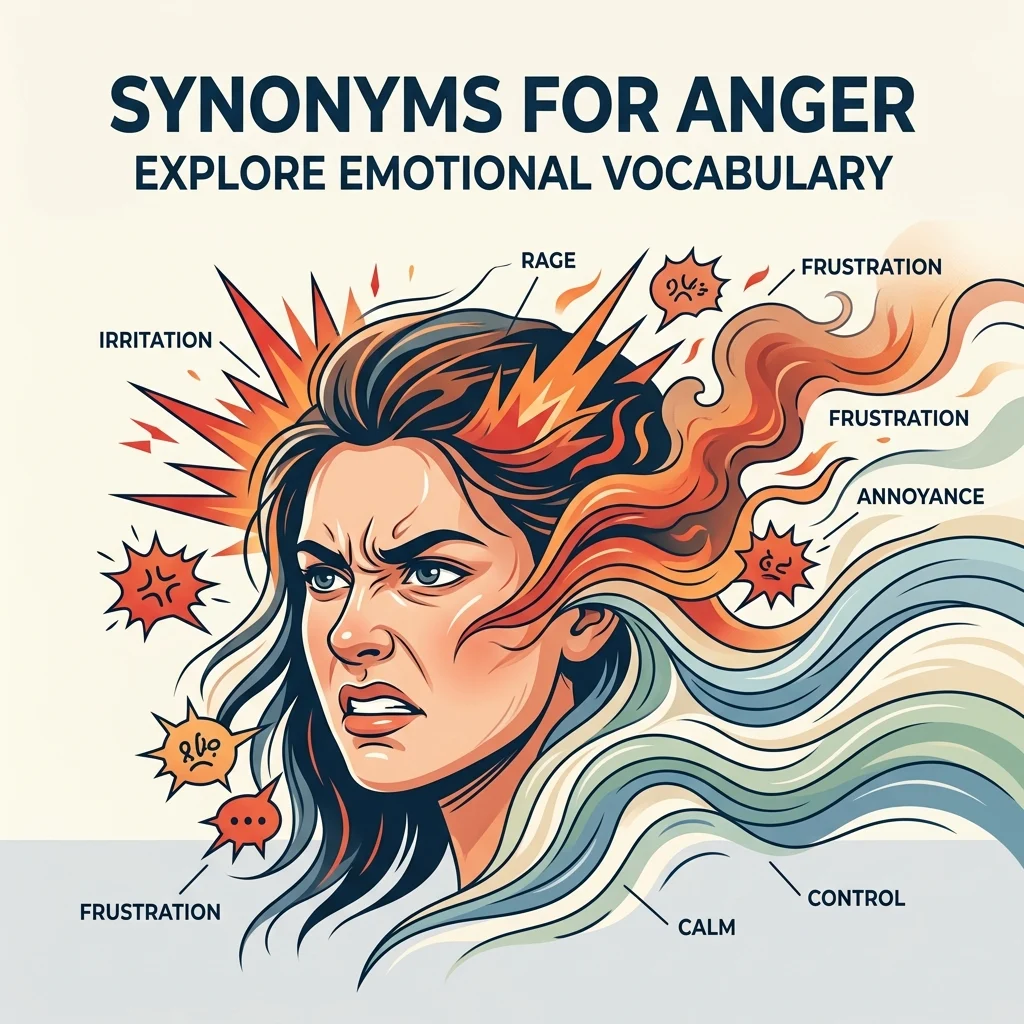
Synonyms for anger include rage, fury, irritation, annoyance, frustration, outrage, resentment, wrath, indignation, and bitterness. Each word describes a different level or type of anger, from mild displeasure to intense fury.
Synonyms for anger can help you express emotions more precisely without repeating the same word in every sentence. But which alternative should you choose? The answer depends on how intense the feeling is, what caused it, and the message you want to convey. Whether you’re writing a story, completing an essay, or improving your English vocabulary, the right word can make your writing clearer and more expressive.
Not all words related to anger have the same meaning. Annoyance describes mild displeasure, while irritation often refers to a feeling caused by something bothersome. Frustration occurs when obstacles prevent you from achieving a goal, whereas rage and fury describe intense anger. For longer-lasting emotions, resentment suggests bitterness over a past experience, while indignation describes anger about something considered unfair or wrong.
For example, you might feel annoyance when someone interrupts you repeatedly, frustration when a difficult task does not go as planned, or outrage when you witness an injustice. These differences make it easier to select a synonym that matches the situation instead of choosing a word simply because it sounds powerful.
In this guide, you’ll discover the best synonyms for anger, including common alternatives, strong and intense expressions, formal words, related emotions, and practical example sentences. You’ll also learn which words suit everyday conversations, academic writing, and creative storytelling. Whether you need a simple replacement for anger or a more precise word to describe a complex emotion, this collection will help you expand your vocabulary and communicate with greater confidence.
Rage
Meaning: Rage is a very strong feeling of anger.
Examples:
- He was filled with rage when he saw the damage.
- She tried to control her rage during the fight.
Fury
Meaning: Fury is a powerful feeling of anger.
Examples:
- His fury grew when nobody listened to him.
- She spoke in fury after hearing the bad news.
Wrath
Meaning: Wrath is strong anger, often caused by a bad act.
Examples:
- The king showed his wrath toward the cruel guard.
- He feared his father’s wrath after breaking the window.
Annoyance
Meaning: Annoyance is a small feeling of anger caused by something bothersome.
Examples:
- The loud music caused great annoyance.
- She showed her annoyance when the bus arrived late.
Irritation
Meaning: Irritation is the feeling you get when something bothers you.
Examples:
- The buzzing fly filled him with irritation.
- I felt irritation when my phone kept ringing.
Resentment
Meaning: Resentment is anger that stays because you feel you were treated unfairly.
Examples:
- He felt resentment after being left out of the team.
- Her resentment grew when her work went unnoticed.
Indignation
Meaning: Indignation is anger caused by something you feel is wrong or unfair.
Examples:
- She felt indignation when the poor child was blamed.
- His voice showed indignation at the unfair rule.
Outrage
Meaning: Outrage is very strong anger about something shocking or unfair.
Examples:
- The cruel act caused outrage in the town.
- People expressed outrage over the unfair decision.
Exasperation
Meaning: Exasperation is strong annoyance when something keeps going wrong.
Examples:
- He sighed in exasperation when the computer froze again.
- She raised her hands in exasperation after many failed tries.
Frustration
Meaning: Frustration is the upset feeling you get when things do not go as planned.
Examples:
- He felt frustration when he could not solve the puzzle.
- Her frustration grew as the line moved slowly.
Displeasure
Meaning: Displeasure is the feeling of being unhappy or unhappy with something.
Examples:
- The teacher showed displeasure at the noisy class.
- He hid his displeasure with a polite smile.
Discontent
Meaning: Discontent is an unhappy feeling because things are not as you want them to be.
Examples:
- The workers shared their discontent about low pay.
- Her discontent grew when the rules changed again.
Hostility
Meaning: Hostility is an angry or unfriendly way of treating someone.
Examples:
- He felt hostility from the rival team.
- Their hostility made the meeting tense.
Bitterness
Meaning: Bitterness is a lasting feeling of anger and hurt.
Examples:
- He spoke with bitterness about the broken promise.
- Years of unfair treatment left her with bitterness.
Resentfulness
Meaning: Resentfulness is the feeling of being angry because you think something is unfair.
Examples:
- His resentfulness showed when his brother got all the praise.
- She felt resentfulness toward the person who took her seat.
Aggravation
Meaning: Aggravation is annoyance caused by something that makes a problem worse.
Examples:
- The extra delay caused more aggravation.
- He felt aggravation when the printer stopped working.
Crossness
Meaning: Crossness is a mild feeling of anger or bad temper.
Examples:
- His crossness disappeared after lunch.
- She spoke with crossness when her little brother took her book.
Irritability
Meaning: Irritability is the state of getting angry or annoyed easily.
Examples:
- Lack of sleep can cause irritability.
- His irritability showed when every small noise bothered him.
Vexation
Meaning: Vexation is a feeling of anger or worry caused by a problem.
Examples:
- She shook her head in vexation at the lost keys.
- The repeated errors caused him great vexation.
Umbrage
Meaning: Umbrage is anger or hurt caused by something you find insulting.
Examples:
- He took umbrage at the rude comment.
- She felt umbrage when her idea was mocked.
Temper
Meaning: Temper is the way someone shows anger, especially when they lose control.
Examples:
- He lost his temper over a small mistake.
- She has a quick temper when she feels tired.
Choler
Meaning: Choler is a strong feeling of anger.
Examples:
- His choler rose when he heard the lie.
- The rude reply filled her with choler.
Ire
Meaning: Ire is a strong feeling of anger.
Examples:
- The careless act drew the coach’s ire.
- He tried not to stir his boss’s ire.
Indignation
Meaning: Indignation is anger you feel when something seems unfair or wrong.
Examples:
- The unfair test results caused indignation among the students.
- She spoke with indignation about the cruel joke.
Belligerence
Meaning: Belligerence is an angry attitude that is ready to fight or argue.
Examples:
- His belligerence turned a small talk into an argument.
- The coach warned him about his belligerence on the field.
Antagonism
Meaning: Antagonism is a strong feeling of dislike or anger toward someone.
Examples:
- Years of rivalry created antagonism between the teams.
- She sensed antagonism in his cold reply.
Animosity
Meaning: Animosity is a strong feeling of anger and dislike toward someone.
Examples:
- Animosity grew between the two neighbors.
- They put aside their animosity to work together.
Acrimony
Meaning: Acrimony is anger shown through harsh or bitter words.
Examples:
- Their discussion ended in acrimony.
- He replied with acrimony after the harsh review.
Enmity
Meaning: Enmity is a deep feeling of hate or anger toward another person.
Examples:
- Old enmity kept the families apart.
- The two rivals tried to end their enmity.
Spite
Meaning: Spite is the wish to hurt or upset someone because you are angry with them.
Examples:
- He hid her notebook out of spite.
- She refused to help him out of spite.
Malice
Meaning: Malice is the wish to hurt another person on purpose.
Examples:
- He spread the rumor with malice.
- Her words were full of malice toward her rival.
Contempt
Meaning: Contempt is a feeling that someone does not deserve respect.
Examples:
- He looked at the dishonest player with contempt.
- Her contempt for his rude behavior was clear.
Scorn
Meaning: Scorn is a strong feeling of disrespect or dislike for someone or something.
Examples:
- She spoke with scorn about the cheating plan.
- He showed scorn for the bully’s cruel words.
Disdain
Meaning: Disdain is the feeling that someone or something is not worth your respect.
Examples:
- She treated the rude remark with disdain.
- He showed disdain for people who broke the rules.
Grudge
Meaning: A grudge is anger that you keep because someone hurt or upset you.
Examples:
- He still held a grudge over the old argument.
- She let go of her grudge and forgave her friend.
Ill Will
Meaning: Ill will is an unfriendly feeling toward another person.
Examples:
- He had no ill will toward his former teammate.
- The argument created ill will between the neighbors.
Bad Temper
Meaning: Bad temper is a habit of getting angry easily.
Examples:
- His bad temper made group work hard.
- She apologized for her bad temper that morning.
Agitation
Meaning: Agitation is a state of feeling upset, worried, or angry.
Examples:
- He paced around in agitation before the meeting.
- Her agitation grew when nobody answered the phone.
Bitterness of Heart
Meaning: Bitterness of heart is deep hurt and anger that stays inside.
Examples:
- He spoke with bitterness of heart after the betrayal.
- She worked to let go of the bitterness of heart she felt.
Indignation at Injustice
Meaning: Indignation at injustice is anger caused by unfair treatment.
Examples:
- The students felt indignation at injustice in the school.
- He raised his voice in indignation at injustice.
Fractiousness
Meaning: Fractiousness is a state of being easily upset and likely to argue.
Examples:
- The long wait caused fractiousness among the children.
- His fractiousness made the family dinner stressful.
Peevishness
Meaning: Peevishness is a habit of getting annoyed over small things.
Examples:
- Her peevishness showed when the tea was too cold.
- He answered with peevishness after being disturbed.
Testiness
Meaning: Testiness is a quick feeling of annoyance or anger.
Examples:
- His testiness surprised everyone at breakfast.
- She replied with testiness when asked the same question again.
Chagrin
Meaning: Chagrin is the upset feeling you get when something goes wrong or makes you look foolish.
Examples:
- He felt chagrin after giving the wrong answer.
- To her chagrin, she forgot her speech.
Huff
Meaning: A huff is a short display of anger or annoyance.
Examples:
- She walked out in a huff after the disagreement.
- He gave a huff when his request was refused.
Tantrum
Meaning: A tantrum is a sudden show of anger, often with crying or shouting.
Examples:
- The child had a tantrum when his toy broke.
- He threw a tantrum after losing the game.
Blowup
Meaning: A blowup is a sudden, angry argument.
Examples:
- Their small disagreement turned into a blowup.
- Dad apologized after the blowup at dinner.
Fit of Anger
Meaning: A fit of anger is a short time when someone feels very angry.
Examples:
- In a fit of anger, he slammed the door.
- She regretted her words after her fit of anger.
Indignation and Resentment
Meaning: Indignation and resentment are angry feelings caused by unfair treatment.
Examples:
- She felt indignation and resentment after being blamed for his mistake.
- Indignation and resentment grew among workers who were ignored.
Rage and Fury
Meaning: Rage and fury describe very strong anger that can be hard to control.
Examples:
- His rage and fury burst out when he saw the broken trophy.
- She took a deep breath to calm her rage and fury.
FAQS
1. What are the most common synonyms for anger?
Common synonyms for anger include rage, fury, irritation, annoyance, resentment, and frustration. Each word describes anger in a slightly different way.
2. What is a strong synonym for anger?
Rage, fury, and wrath are strong synonyms for anger. They describe a powerful feeling that can be hard to control.
3. What is a mild synonym for anger?
Annoyance, irritation, and crossness can describe mild anger. These words are useful when something bothers you but does not make you extremely angry.
4. How can I use synonyms for anger in writing?
You can use synonyms to make your writing more clear and interesting. For example, instead of writing “He felt anger,” you can write “He felt deep resentment” or “She showed her fury.”
5. Why should students learn synonyms for anger?
Students can use these words in essays, stories, schoolwork, and daily conversations. Learning them helps students express feelings more clearly and build their English vocabulary.
Conclusion
Learning synonyms for anger helps you express your feelings in better ways. Words like rage, irritation, fury, and frustration make your writing more clear and interesting. They also help you speak with confidence and understand what other people mean. Practice these words in emails, essays, stories, and daily conversations. Start with a few words each day, and soon you will have more ways to express yourself in English.

Ethan Caldwell writes at the edge of mystery and human nature, where every secret has a consequence. His atmospheric stories explore obsession, identity, and the choices that haunt us, creating unforgettable characters and narratives that linger long after the final page.
Pingback: 92+ Synonyms for Determination: Find the Right Word